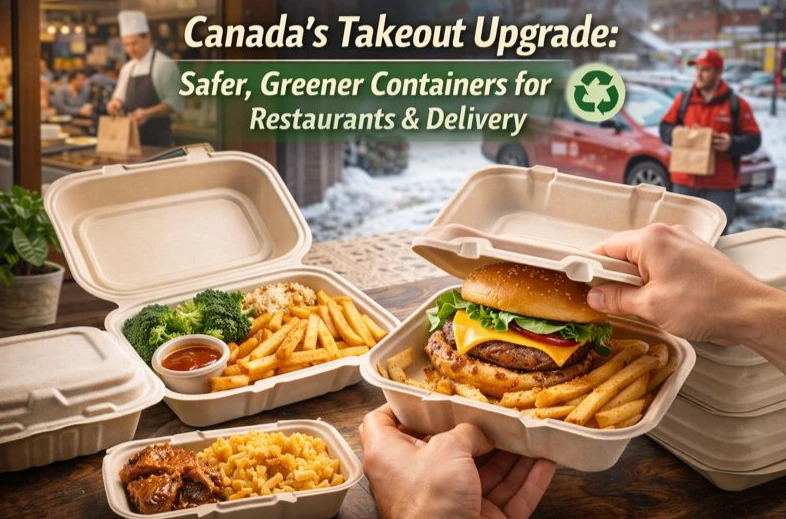
Canada’s Takeout Upgrade: Why Bagasse Clamshells Win
“Do we have enough containers for tonight’s pickup rush?”
“Enough—yes. But the lids keep popping when we stack them.”
“And customers are messaging again… they don’t want foam.”
A brief silence, then the owner said the quiet part out loud: “We need packaging that holds heat, survives delivery, and doesn’t make us look outdated.”
Also Read: Is Buying Instagram Likes Worth It? The Truth You Need Now
That conversation is playing out across Canada—from busy downtown lunch spots to suburban meal-prep brands and weekend food truck festivals. Packaging has moved from “back-of-house detail” to front-line brand experience. The container you choose now affects reviews, repeat orders, and even staff speed during peak service.
For operators who want a cleaner sustainability story and better performance, molded-fiber bagasse clamshells are increasingly the practical answer. Two useful starting points for B2B buyers are Bioleader and their dedicated line of Bagasse Clamshell Containers—especially if you care about consistency, export-ready supply capacity, and a complete size range for real menus.
The Real Reason Canadian Food Businesses Are Switching Packaging
Many brands say they’re switching “to be eco-friendly,” but procurement teams and owners usually move for three sharper reasons:
1) Customer perception is now a revenue lever
In takeaway and delivery, the container is the first physical touchpoint. A flimsy, sweaty, or foam-style box creates an immediate quality penalty—before the food is even tasted.
In consumer research across foodservice markets, a consistent finding is that most diners prefer brands that reduce single-use plastic, and many will pay a modest premium for sustainable packaging when the experience feels premium (clean, sturdy, modern). In practice, that means packaging affects:
- online ratings (“arrived soggy,” “spilled,” “smelled like foam”)
- brand trust (“they cut corners”)
- repeat behavior (customers quietly switch)
2) Delivery conditions are a stress test, not a normal meal
Canadian delivery introduces real-world friction:
- temperature swings between kitchen and doorstep
- steam condensation inside containers
- stacking pressure in courier bags
- longer hold times during snow/rain or rush-hour bottlenecks
Packaging that performs for “eat immediately” often fails in “deliver and reheat.”
3) Operational efficiency matters more than unit cost
The cheapest container is rarely the lowest cost in real service. If a container causes:
- relidding, double-boxing, or bag replacement
- remakes due to spills
- slower packing lines
…then the “cheap” unit price becomes expensive operationally.
What Bagasse Clamshell Containers Actually Are (And Why They Work)
Bagasse is the fibrous material left after sugarcane juice extraction. When formed into molded fiber packaging, it creates rigid structures that perform well in hot-food service.
Why molded fiber clamshells are winning in takeout
For many menus, a bagasse clamshell delivers a strong balance of:
- rigidity (less bending in hand and in stacks)
- heat tolerance (better for hot entrées vs thin plastic)
- breathable structure (helps reduce “soggy fry syndrome” compared to fully sealed plastics)
- premium appearance (clean, matte, food-forward presentation)
The hidden advantage: workflow speed
Clamshells are designed for fast packing:
- one-hand open/close
- stable base for portioning
- consistent shape for stacking
This can translate into measurable throughput improvement during peak periods.
The Canadian Menu Match: Which Foods Benefit Most from Bagasse Clamshells
Not every item needs a clamshell. But when it’s the right tool, it solves multiple problems at once.
Best-fit menu categories
- Burgers + sandwiches + sides
The clamshell shape protects structure and reduces crushing in delivery bags. - Fried foods and comfort meals
Better rigidity + less condensation pooling helps fries, wings, and breaded items hold texture longer. - BBQ, smoked meats, and saucy mains
Strong base structure supports heavier portions without collapse. - Meal prep and weekly lunch programs
Predictable sizing, stackability, and portion control improve production planning.
When you may want a different format
If your menu is soup-heavy or extremely liquid-forward, bowls with lids or compartment trays may be more appropriate. Many operators use a mixed system: clamshells for mains + bowls for liquid items.
Performance Reality: The 5 Failure Points That Make Buyers Switch
In Canadian delivery, packaging fails in repeatable ways. The goal isn’t perfection—it’s predictable performance.
1) Lid failure under stacking pressure
Courier bags can compress stacks. Weak hinges or soft rims lead to popping lids and leakage.
2) Condensation and sogginess
Hot food releases steam. If the container seals too tightly without managing moisture, fries soften and bread gets wet.
3) Oil penetration and stain-through
Greasy items test barrier performance. Many low-quality paper-based containers show early discoloration and softening.
4) Warping from heat
Thin plastics and some low-grade materials deform with heat, causing poor closure and weak stacking.
5) Customer handling experience
If a container flexes in hand, the customer perceives it as lower quality—even if the food is great.
A key reason molded fiber clamshells became popular is that they address these failure points in a balanced way, especially for high-volume takeaway.
What “Scientific Data” Means for Packaging Buyers (Without Getting Academic)
Buyers don’t need a lab report to make good decisions, but evidence-based thinking prevents costly mistakes.
Here are high-confidence findings repeatedly supported across lifecycle assessments and consumer studies in food packaging:
- Packaging is a visible sustainability signal. When customers can see that a restaurant reduced foam or plastic, perceived brand responsibility increases—and that correlates with higher willingness to reorder.
- Material choice shifts end-of-life outcomes. Fiber-based packaging generally has more established recovery pathways than mixed plastics, especially when contamination is managed and disposal instructions are clear.
- Operational waste often beats “perfect material.” The biggest gains come from standardizing SKUs, reducing double-packaging, and choosing formats that prevent spills and remakes.
Practical takeaway for Canadian operators
If you want measurable improvement, focus on:
- fewer remakes (less food waste)
- fewer spills (less packaging waste)
- fewer double containers (lower unit volume)
- better stacking efficiency (lower transport friction)
A Procurement-Grade Checklist: How to Select the Right Bagasse Clamshell
When buyers get disappointed, it’s usually because they bought based on “eco claims,” not specifications. Treat your clamshell as a functional component in your service system.
Key specs to evaluate
- Rigidity under load: test with your heaviest entrée + sides
- Hinge resilience: open/close cycles without tearing
- Closure integrity: shake test in a delivery bag
- Oil resistance: greasy proteins + sauces for 20–40 minutes
- Stack stability: 8–12 high stack test (realistic for peak service)
- Size fit: too small causes overloading; too big increases cost and waste
A simple in-kitchen test protocol
Use a 3-day test to avoid false confidence:
- Day 1 (in-store dine-in style): 10–15 min hold
- Day 2 (takeout simulation): 25–35 min hold in bag
- Day 3 (delivery stress): stack pressure + movement + reheating behavior
Track:
- lid failures
- softening
- condensation impact
- customer feedback snippets
Bioleader Case Study: How a Multi-Location Takeout Brand Reduced “Packaging Complaints”
Below is a procurement-style case pattern based on common B2B adoption dynamics. It’s anonymized to protect buyer identity, but structured the same way operators measure results.
Scenario: Multi-location quick-service concept in a major Canadian metro
Initial issues
- frequent customer complaints about crushed burgers and soggy sides
- staff double-boxing during peak hours
- inconsistent container quality between restocks
Packaging change
- standardized a core set of molded fiber clamshell SKUs
- introduced clear packing rules (venting timing, sauce separation when needed)
- locked consistent carton specs and reorder rhythm through a manufacturing-led supplier
Operational outcomes observed over 6–10 weeks
- fewer “arrived damaged” complaints
- reduced need for double containers
- smoother pack line during rush periods
- cleaner brand presentation in customer photos
Why this matters
The win wasn’t just “eco.” It was performance-led compliance—packaging that supports delivery realities while improving brand perception. This is where suppliers with stable capacity and consistent molding quality—like Bioleader—tend to outperform fragmented trading supply.
How to Roll This Out Without Disrupting Your Kitchen
Switching packaging should feel like an operational upgrade, not a risky experiment.
Step-by-step rollout plan
- Segment your menu
- dry/crispy mains
- saucy or greasy mains
- mixed meals with sides
- Choose clamshell sizes that match portion reality
- Pilot during peak service (not slow hours)
- Train staff on 3 packing rules
- don’t trap excessive steam for crispy foods
- separate sauces where possible
- avoid overloading undersized clamshells
- Standardize SKUs to reduce supplier variability
- Measure outcomes
- complaint rate
- remake rate
- packaging consumption per 100 orders
Cost control levers that protect quality
- stop double-boxing by upgrading the main container
- reserve premium clamshells for high-value items and combos
- standardize 2–3 sizes only (avoid SKU sprawl)
- align carton quantities to weekly order cycles
The “Quiet Marketing” Advantage: Packaging That Sells Without Talking
Most Canadian restaurants don’t want to sound preachy about sustainability. The smarter approach is to let the container do the talking.
When customers see a clean, sturdy molded-fiber clamshell:
- the meal looks more premium
- the brand feels more modern
- the “guilt factor” of single-use decreases
- the unboxing moment improves (which boosts shareability)
That’s why bagasse clamshells often outperform generic paper or thin plastic containers in brand perception—even before you mention sustainability.
Conclusion: The Container Is Now Part of the Menu Experience
Back to the opening scene:
“Do we have enough containers?”
“Yes—but do they protect the food, the brand, and the customer experience?”
In Canada’s takeaway and delivery environment, that question is no longer optional. Packaging is now a performance component—affecting speed, waste, reviews, and repeat business.
That’s why more operators are moving toward molded fiber solutions and size-standardized purchasing. If your goal is to upgrade reliability while keeping a credible sustainability narrative, Bagasse Clamshell Containers are a logical, high-impact step—and working with a manufacturing-led supplier like Bioleader can help you scale with consistent quality, stable specs, and real operational confidence.
If you want, I can also generate a matching 12:9 feature image prompt for this article (Canada takeout scene + bagasse clamshell unboxing + modern, premium vibe) and the full SEO image metadata (file name, alt text, title, caption, description) in one deliverable.