Wedding Flower Arrangements: Beautiful Style & Planning
Flowers play an important role in weddings because they bring color, texture, fragrance, and elegance into the celebration. From bridal bouquets to reception centerpieces, floral designs help define the overall atmosphere of the event. Couples often spend months choosing flowers that reflect their personalities, wedding themes, and seasonal preferences. Thoughtfully planned floral décor can transform even a simple venue into a visually stunning setting.
Also Read: Polyimide Circuit Board: High Temp Flexible Tech Solution AI
Wedding flowers are more than decorative pieces. They create emotional impact and contribute to the mood of the ceremony and reception. Soft pastel roses can create a romantic environment, while greenery and wildflowers may produce a natural and rustic appearance. Every arrangement contributes to the visual harmony of the event.
When exploring ideas for wedding flower arrangements, it is helpful to understand how different flowers, colors, and styles work together. Careful planning allows couples to create floral designs that complement the venue, season, and overall wedding vision without overwhelming the space.
The Importance of Floral Design in Weddings
Flowers are often one of the first decorative elements guests notice upon entering a wedding venue. They create focal points and connect different design elements throughout the celebration. Floral arrangements can guide guests visually from the ceremony entrance to the reception tables while maintaining a cohesive style.
The emotional symbolism attached to flowers also adds meaning to weddings. Roses traditionally represent love, peonies symbolize prosperity, and lilies are often associated with purity and commitment. Couples frequently choose blooms based not only on appearance but also on their personal significance.
In addition to beauty, floral arrangements help balance the dimensions of a venue. Tall centerpieces can enhance large banquet halls, while delicate table arrangements suit intimate gatherings. Strategic floral placement ensures that every part of the venue feels complete and visually balanced.
Popular Types of Wedding Flower Arrangements
Wedding floral décor includes many different arrangement styles. Each arrangement serves a unique purpose and contributes to the overall wedding aesthetic.
Bridal Bouquets
The bridal bouquet is often considered the centerpiece of wedding flowers. It reflects the bride’s style and typically coordinates with the wedding dress and color palette. Popular bouquet styles include:
- Round bouquets
- Cascade bouquets
- Hand-tied bouquets
- Posy bouquets
- Wildflower-inspired bouquets
Bouquets often combine focal flowers with greenery and filler blooms to create texture and dimension. Seasonal flowers are commonly selected because they provide freshness and better availability.
Ceremony Arrangements
Ceremony flowers create the atmosphere where vows are exchanged. These arrangements may include:
- Floral arches
- Aisle markers
- Pew flowers
- Altar arrangements
- Entrance floral displays
Large floral installations are becoming increasingly popular because they create dramatic backdrops for wedding photography. However, smaller arrangements can also create elegance when designed thoughtfully.
Reception Centerpieces
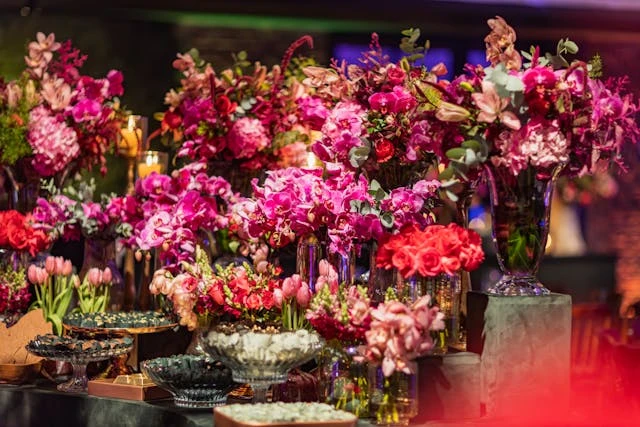
Centerpieces influence the visual tone of the reception area. Couples often choose between tall dramatic arrangements and low, intimate floral displays depending on the venue and guest interaction preferences.
Popular centerpiece flowers include:
- Roses
- Hydrangeas
- Orchids
- Ranunculus
- Carnations
- Eucalyptus greenery
Candles, glass vases, and decorative accents are often incorporated to add warmth and texture.
Choosing Flowers Based on Wedding Themes
Wedding flowers should complement the overall theme and atmosphere of the celebration. Different floral combinations work best for different wedding styles.
Classic and Elegant Weddings
Traditional weddings often feature timeless flowers such as white roses, peonies, and hydrangeas. Neutral tones and symmetrical arrangements create a sophisticated appearance.
Gold accents, crystal vases, and soft candlelight commonly pair well with elegant floral arrangements.
Rustic Weddings
Rustic floral designs usually incorporate greenery, wildflowers, sunflowers, and earthy textures. Mason jars, wooden containers, and loose bouquet styles are frequently used to maintain a relaxed and natural atmosphere.
Muted tones such as sage green, dusty pink, and cream often suit rustic weddings well.
Modern Weddings
Modern weddings typically focus on minimalist floral arrangements with clean lines and monochromatic color palettes. Orchids, anthuriums, and structured greenery are often selected for contemporary designs.
Minimal floral installations can create a dramatic effect without overcrowding the venue.
Garden-Inspired Weddings
Garden weddings often use soft pastel blooms and abundant greenery to create a romantic outdoor feel. Floral arches, hanging flowers, and overflowing centerpieces help enhance the natural surroundings.
Seasonal Wedding Flower Selection
Choosing flowers that are naturally available during the wedding season can improve freshness and reduce overall costs. Seasonal blooms also tend to look more natural within the environment.
Spring Flowers
Spring weddings commonly feature:
- Tulips
- Peonies
- Lilacs
- Daffodils
- Hyacinths
These flowers create a soft and refreshing atmosphere perfect for romantic celebrations.
Summer Flowers
Summer weddings benefit from vibrant blooms such as:
- Sunflowers
- Dahlias
- Roses
- Zinnias
- Delphiniums
Bright colors and lush greenery are especially popular during this season.
Autumn Flowers
Fall weddings often include warm, earthy colors and textured arrangements featuring:
- Chrysanthemums
- Marigolds
- Dahlias
- Autumn leaves
- Dried grasses
These arrangements create warmth and richness within the venue.
Winter Flowers
Winter weddings usually focus on elegant and dramatic floral choices such as:
- White roses
- Amaryllis
- Anemones
- Evergreen branches
- Pinecones
Metallic accents and candlelight pair beautifully with winter floral décor.
Tips for Managing a Wedding Flower Budget
Floral décor can become expensive without proper planning. Setting a clear budget early helps couples prioritize the arrangements that matter most.
Focus on Key Areas
Instead of placing flowers everywhere, couples can concentrate on high-visibility locations such as:
- Ceremony altar
- Reception entrance
- Bridal bouquet
- Guest tables
- Cake table
This strategy creates a strong visual impact while controlling costs.
Use Greenery Creatively
Greenery is often more affordable than premium blooms and can still create fullness and elegance. Eucalyptus, ivy, ruscus, and ferns are commonly used to enhance arrangements without significantly increasing expenses.
Repurpose Ceremony Flowers
Many ceremony arrangements can be reused during the reception. Floral arches, aisle arrangements, and altar flowers can often be moved to the reception area after the ceremony ends.
Select In-Season Flowers
Seasonal blooms are generally easier to source and more cost-effective. Imported flowers may significantly increase the floral budget.
Color Coordination in Wedding Flowers
Color plays a major role in wedding floral design because it influences mood and visual harmony. Couples usually choose floral colors that complement bridesmaid dresses, linens, venue décor, and lighting.
Soft pastel shades create romance and elegance, while bold colors add energy and personality. Neutral tones remain popular because they blend well with various wedding styles.
Some commonly used wedding palettes include:
- White and greenery
- Blush pink and ivory
- Burgundy and gold
- Lavender and sage
- Peach and cream
- Blue and silver
Carefully balancing flower colors prevents arrangements from appearing overwhelming or disconnected from the overall décor.
Floral Trends in Modern Weddings
Wedding flower trends continue evolving as couples seek more personalized and creative designs. Current trends focus on natural movement, sustainability, and unique textures.
Sustainable Floral Choices
Eco-conscious weddings increasingly use locally grown flowers and reusable décor materials. Many couples also choose potted plants or dried flowers to reduce waste.
Hanging Floral Installations
Suspended floral arrangements above dance floors or dining tables create dramatic visual impact and maximize venue space.
Monofloral Arrangements
Some couples prefer arrangements using only one flower type for a clean and modern appearance. Large rose or orchid installations are especially popular in luxury weddings.
Dried and Preserved Flowers
Dried flowers add texture and vintage charm. Pampas grass, preserved roses, and bleached foliage are frequently used in bohemian-inspired weddings.
How to Work Effectively With a Florist
Communication with a florist is essential for achieving the desired floral outcome. Couples should prepare inspiration photos, color references, and venue details before consultations.
Helpful information to discuss includes:
- Wedding theme
- Venue size
- Budget range
- Preferred flowers
- Floral priorities
- Seasonal considerations
Florists can also provide valuable guidance regarding flower durability, weather concerns, and arrangement sizing.
Clear expectations help avoid misunderstandings and ensure floral arrangements align with the wedding vision.
Conclusion
Wedding flowers contribute significantly to the beauty and atmosphere of a celebration. From bouquets and centerpieces to ceremony installations, floral arrangements help create a memorable environment that reflects the couple’s personality and style. Thoughtful flower selection, careful budgeting, and seasonal planning allow couples to achieve elegant floral décor without unnecessary stress.
Couples researching inspiration for wedding flowers can benefit from understanding different floral styles, seasonal blooms, and arrangement techniques before making final decisions. With proper planning, flowers can enhance every part of the wedding experience and create lasting visual memories.
FAQs
1. How far in advance should wedding flowers be planned?
Most couples begin planning wedding flowers six to eight months before the wedding date. Early planning allows time to discuss themes, compare floral styles, and secure seasonal blooms. Booking a florist in advance is especially important during busy wedding seasons when availability may become limited.
2. What flowers are most commonly used in weddings?
Roses, peonies, hydrangeas, orchids, carnations, and lilies are among the most popular wedding flowers. These blooms are widely used because they are versatile, available in many colors, and suitable for different arrangement styles ranging from classic elegance to modern minimalism.
3. Are artificial flowers suitable for weddings?
Artificial flowers can work well for weddings when high-quality materials are used. They are long-lasting, weather-resistant, and often more affordable for large installations. Many couples combine artificial flowers with fresh greenery to create realistic and budget-friendly arrangements for ceremonies and receptions.
4. How can couples reduce wedding flower costs?
Couples can reduce floral expenses by choosing seasonal flowers, reusing ceremony arrangements during the reception, and incorporating greenery into designs. Prioritizing key decorative areas rather than filling every space with flowers also helps maintain a balanced budget without sacrificing elegance.
5. Which flower colors are best for wedding décor?
The best flower colors depend on the wedding theme, season, and venue style. White and blush tones create timeless elegance, while bold colors like burgundy or deep purple add drama. Neutral palettes remain popular because they blend well with most wedding décor and photography styles.